City of Lynchburg
The City of Lynchburg has enacted a Stormwater Management Ordinance in order to reduce the adverse impacts of stormwater runoff from development sites in the City of Lynchburg to the greatest extent possible, by establishing minimum requirements and procedures to control the quantity and quality of stormwater runoff associated with land development. The City of Lynchburg is the permitting authority for all land disturbing activities and requires the land owner to maintain all on-site stormwater control facilities and all open space areas (e.g. parks or “green” areas) required by the approved stormwater control plan. The City of Lynchburg will only provide construction permits to projects that establish a plan to manage stormwater runoff occurring during the construction process. Stormwater fees will be collected by the City of Lynchburg and both residential and non-residential properties can qualify for stormwater fee credits by implementing stormwater Best Management Practices that improve water quality and reduce quantity of stormwater runoff. The City of Lynchburg, under the NPDES program, also has the authority to inspect properties for noncompliance and can issue a notice of violation (NOV) for any deficiency or infraction onsite.
Stormwater Management Ordinance
Sec. 16.2-57. Inspections and monitoring.
(f) Post-construction inspections of stormwater management facilities required by the provisions of this chapter shall be conducted by the administrator or any duly authorized agent of the administrator pursuant to the City of Lynchburg’s adopted and state board approved inspection program, and shall occur, at minimum, at least once every five years.
(h) In order to assure compliance with the provisions of this chapter, and all applicable city ordinances, state and federal laws, orders or regulations, the stormwater administrator or his agent shall have the right to inspect any property on which a stormwater maintenance facility is located, public or private, within the city at any reasonable time. In the event the stormwater administrator or his agent shall be denied access to property, the stormwater administrator or his agent may present sworn testimony to a magistrate or court of competent jurisdiction and if such sworn testimony establishes (i) probable cause that a violation of this chapter has occurred, or (ii) that the stormwater administrator or his agent has been denied access to property as part of a routine inspection program, request that the magistrate or court grant the stormwater administrator or his agent an inspection warrant to enable the stormwater administrator or his agent to enter the property for the purpose of determining whether a violation of this chapter exists. The stormwater administrator or his agent shall make a reasonable effort to obtain consent from the owner or occupant of the subject property prior to seeking the issuance of an inspection warrant under this section. It shall be a violation of this section for any person to deny the stormwater administrator or his agent access to any property after the stormwater administrator or his agent has obtained an inspection warrant from a magistrate or a court of competent jurisdiction for the inspection of such property. Nothing herein shall be construed to authorize the stormwater administrator or his agent to enter or inspect the interior portions of any structure situated on such property unless the inspection is reasonably necessary to verify the presence and character of a stormwater maintenance facility or control measure that the owner of the property claims to be installed therein.
Sec. 16.2-60. Maintenance agreement.
(a) A maintenance agreement, on a form prescribed by the City of Lynchburg, between the city and the owner of any permanent stormwater control facility shall be submitted and recorded prior to approval of the stormwater management plan required by this chapter.
(b) Responsibility for the operation and maintenance of stormwater management facilities, unless assumed by the City or other governmental agency, shall run with the land and remain with the property owner and shall pass to any successor or owner. If portions of the land are to be sold, legally binding arrangements shall be made to pass the basic responsibility to successors in title. These arrangements shall designate for each parcel the property owner, governmental agency, or other legally established entity to be permanently responsible for maintenance.
(c) In the event that the stormwater management facilities are in need of maintenance or become a danger to public safety or public health, the responsible person shall be notified in writing, and given a reasonable period of time to take necessary action. If the responsible person fails or refuses to perform such maintenance and repair, the City has the authority to perform the work and to recover the costs from the responsible person. Any costs, including interest, which remain unpaid, may be collected in the same manner as unpaid taxes are collected, and shall constitute a lien against the property, ranking on a parity with liens for unpaid taxes.
(d) To ensure proper performance of the stormwater management facility, the owner is responsible for inspecting the stormwater management facility on an annual basis and after any storm, which causes the capacity of the facility to be exceeded. More frequent inspections may be required if deemed necessary by the administrator. The owner must file written record of inspections to the department of water resources within five (5) working days of the inspection.
(e) The maintenance agreement submitted to the City of Lynchburg shall allow for the City to enter the property for purposes of inspection by the administrator or designee, shall permit the City or designee to enter the property for the purpose of maintenance and repair should the responsible party not fulfill these duties, shall provide for the submission of inspection and maintenance reports as required by the City, and shall be enforceable by all appropriate governmental parties.
Sec. 16.2-61. Maintenance of stormwater management facilities.
(a) Any property owner that has a stormwater management facility on his property shall maintain such facility in a good operating condition. The maintenance of the stormwater management facility shall be in accordance with all applicable city and state requirements and regulations, and shall include but shall not be limited to the following:
- The filing of an annual inspection of the facility by a qualified inspector and the filing of an annual written inspection report with the City’s stormwater administrator, describing the condition of the stormwater management facility. The annual inspection report shall be due by the end of each calendar year, and the inspection shall have been performed within two months prior to the date of the report. The report shall state the property’s address, the owner’s name, the inspection date, the inspector’s name and qualifications, and shall describe any deficiencies and any required maintenance that is needed to bring the stormwater management facility into compliance with city and state requirements and regulations.
- The filing of a supplementary report on the remediation of any deficiencies identified in the annual inspection report; such supplementary report on remediation efforts shall be due within three months of the date of the inspection report.
- The removal and proper disposal of sediment when the flow or storage of the stormwater has been significantly restricted or reduced by sediment;
- The removal and proper disposal of trash, debris, loose brush and other growth from the stormwater management facility, as needed;
- The removal and proper disposal of any oil or grease which has accumulated within the stormwater management facility;
- The replacement and proper disposal of any chemical treatment media and any filter media which have ceased to function at design levels;
- The annual cutting of any brush and other woody growth on and around any embankment fill, and the stabilization of the banks of the stormwater management facility, as needed;
- The inspection, maintenance and repair of any fence installed around the stormwater management facility;
- Any necessary repairs to the dam, emergency spillway and any low spots in any stormwater retention pond; and
- All other repairs and improvements which are reasonably necessary to keep the stormwater management facility operating in an efficient, safe and sanitary manner.
Sec. 16.2-62. Enforcement.
(d) Any person who violates any provision of this ordinance shall be guilty of a misdemeanor and shall be subject to a fine or imprisonment for each violation, or both.
(f) Without limiting the remedies, which may be obtained in this section, the administrator may bring a civil action against any person for violation of this chapter, or any condition of the permit or approval, or any provision of the local program. The action may seek to impose of a civil penalty of not more than thirty-two thousand, five hundred dollars ($32,500) for each violation.
(h) With the consent of any person who has violated or failed, neglected or refused to obey this ordinance or any condition of the permit or approval or any provision of the local program, the administrator may issue an order against or to such person, for the payment of civil charges for violations in specific sums, not to exceed the limit specified in subsection (f) of this section. Such civil charges shall be instead of any appropriate civil penalty, which could be imposed under subsection (f).
(i) Violations for which a penalty may be imposed under this Subsection shall include but not be limited to the following:
- No state permit registration;
- No SWPPP;
- Incomplete SWPPP;
- SWPPP not available for review;
- No approved erosion and sediment control plan;
- Failure to install stormwater BMPs or erosion and sediment controls;
- Stormwater BMPs or erosion and sediment controls improperly installed or maintained;
- Operational deficiencies;
- Failure to conduct required inspections;
- Incomplete, improper, or missed inspections; and
- Discharges not in compliance with the requirements of Section 9VAC25-880-1170 of the general permit.
Sec. 16.2-75. Inspections and monitoring.
(a) The administrator and/or his or her designee(s) shall have authority to carry out all inspection, surveillance and monitoring procedures necessary to determine compliance and noncompliance with the provisions of this article, including the prohibition of illicit discharges to the storm sewer system. The program administrator and/or his or her designee(s) may monitor stormwater outfalls or other components of the municipal storm sewer system as may be appropriate in the administration and enforcement of this article.
(b) The administrator and/or his or her designee(s) shall have the authority to require pollution prevention plans from any person whose discharges cause or may cause a violation of any VPDES permit, including the one held by the city.
(c) The administrator and/or his designee(s) shall have the authority to enter into private property to conduct investigations relative to this article. No inspection shall be conducted without the consent of the tenant, occupant, property owner or the owner’s representative or pursuant to a duly issued administrative inspection warrant or as authorized by other lawful means.
Sec. 16.2-76. Violations and penalties.
(a) A willful violation of the provisions of this article shall constitute a Class 1 misdemeanor. Each day that a continuing violation of this article is maintained or permitted to remain shall constitute a separate offense.
(b) Any person who commits any act prohibited by this article shall be liable to the city for all costs of detecting, tracing, testing, containment, cleanup, abatement, removal, and disposal of any substance unlawfully discharged into the storm sewer system.
(c) Any person who commits any act prohibited by this article shall be subject to a civil penalty in an amount not to exceed one thousand dollars ($1,000.00) for each day that a violation exists. The city may issue a summons for the collection of the civil penalty and the action may be prosecuted in the local courts. Any civil penalties assessed by a court as a result of a summons issued by the city shall be paid into the treasury of the city for the purpose of abating, preventing or mitigating environmental pollution.
(d) The city may bring legal action to enjoin the continuing violation of and to insure compliance with the provisions of this chapter, including injunction, abatement or other appropriate action or proceeding. The existence of any other remedy, at law or in equity, shall be no defense to any such action.
(e) The administrator and/or his or her designee(s) shall have authority to order that any activity found to be in violation of this article be stopped or conducted in such a manner as to avoid the discharge of any illicit materials into the storm sewer system.
(f) Any discharge caused or permitted to exist in violation of any provisions of this article constitutes a threat to the public health, safety and welfare, and is hereby declared and deemed a public nuisance. Following receipt of written notice of such nuisance from the administrator and/or his or her designee(s), if the responsible person fails to abate or obviate such nuisance, then the city may do so and charge and collect the cost thereof from the responsible person, in any manner provided by law (including, without limitation, any manner provided by law for the collection of state or local taxes).
(g) The remedies set forth in this section shall be cumulative, not exclusive, and it shall not be a defense to any action, civil or criminal, that one or more of the remedies set forth herein has been sought or granted.
Supplemental Documents:
Lynchburg Stormwater Management Ordinance
Lynchburg Stormwater Website
Lynchburg Rain Garden Installation and Design
Lynchburg Vegetated Filter Strips Design and Maintenance Guide
Lynchburg Stormwater Credit Program

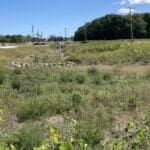 Regenerative Stormwater Conveyance Improves Highway Drainage in Kenosha, Wis.The Root-Pike Watershed Initiative Network Kenosha County, and others worked with AQUALIS to design and implement an innovative solution for stormwater control along Highway KR.
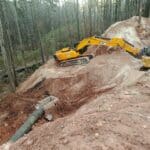 Sinkhole Leads to Stormwater System Repair in Durham, N.C.The tenant on this property noticed a depression that opened to the ground below and notified the property owners.