

Last Updated 07/20/2026
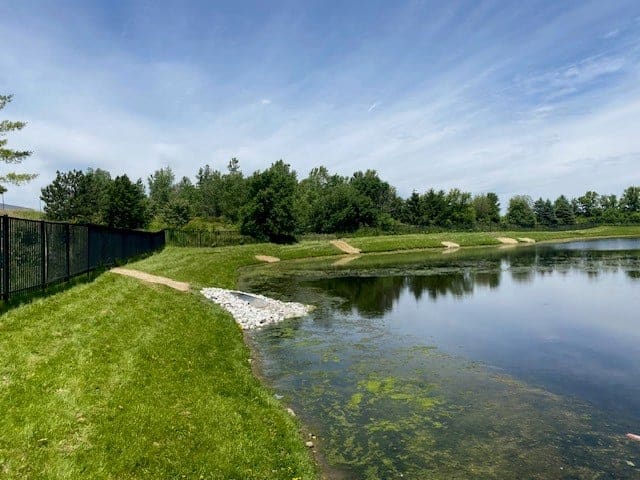
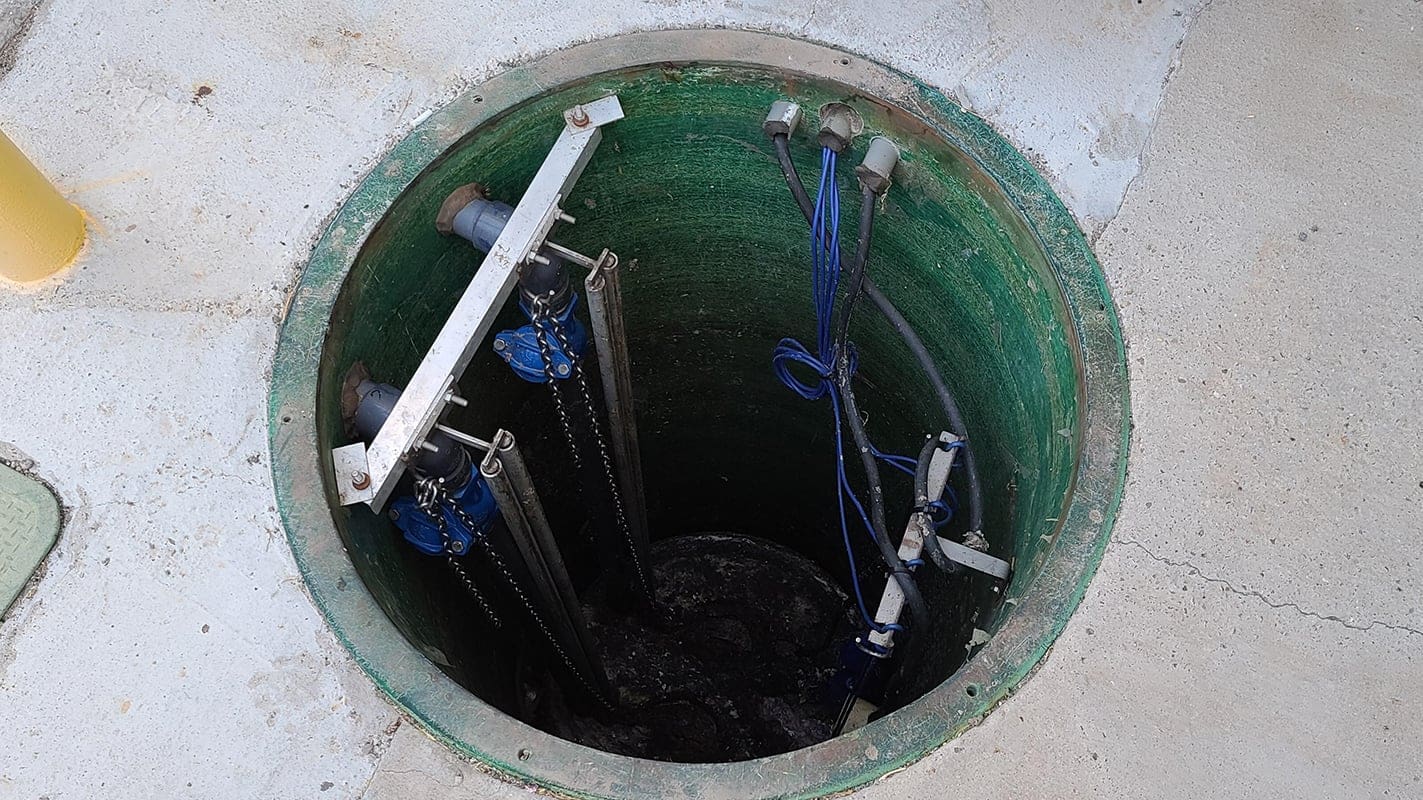
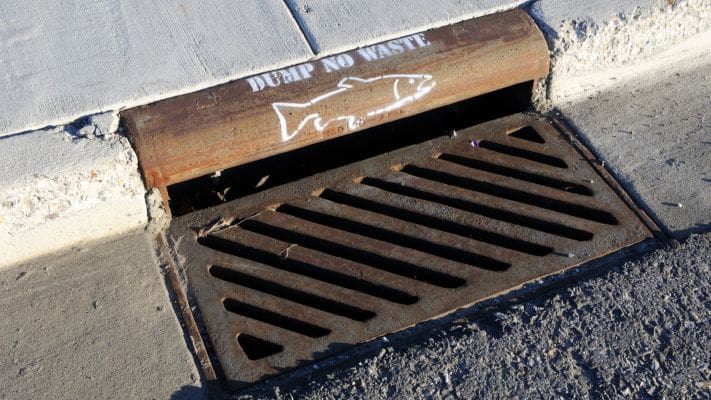
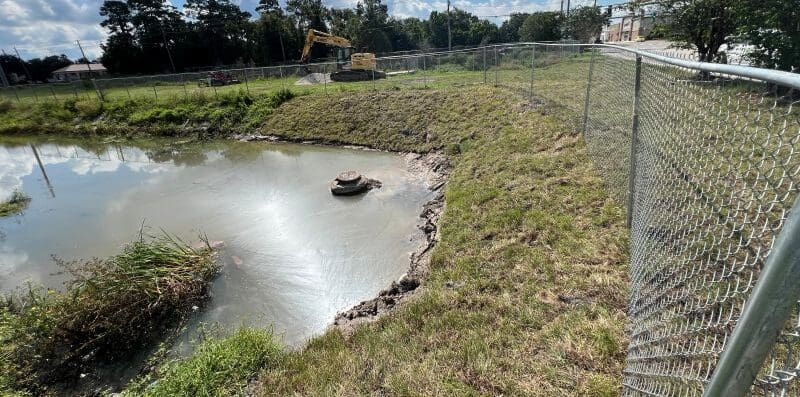
The City of Fayetteville has enacted a Stormwater Ordinance in order to establish minimum stormwater management requirements and controls to protect and safeguard the general health, safety, and welfare of the public residing in watersheds within this jurisdiction. The City of Fayetteville is the permitting authority for all land disturbing activities and requires the land owner to maintain all on-site stormwater control facilities and all open space areas (e.g. parks or “green” areas) required by the approved stormwater control plan. The City of Fayetteville will only provide construction permits to projects that establish a plan to manage stormwater runoff occurring during the construction process. The City of Fayetteville, under the NPDES program, also has the authority to inspect properties for noncompliance and can issue a notice of violation (NOV) for any deficiency or infraction onsite. Property owners are responsible for the maintenance of any stormwater facilities or practices located on the property. The City of Fayetteville has the authority to inspect stormwater facilities and practices in order to ascertain that they are properly maintained and functioning.
Excerpt from the City of Fayetteville Drainage Criteria Manual
SECTION 4.5. STORMWATER QUALITY BMP LONG TERM MAINTENANCE
Each water quality BMP installed on a site requires regular maintenance to ensure that it functions properly. A BMP-specific maintenance agreement for each development site is required. The maintenance agreement consists of the following:
- An Inspection and Maintenance Agreement signed by the developer or BMP owner.
- A long term maintenance plan written by the engineer or site designer that includes a description of the stormwater system and its components, inspection priorities and schedule for each component, and BMP schematics for each BMP. The plan should also include requirements for the proper disposal of any materials removed from the BMP during maintenance; and
- A drawing of easements on a plat or a system location map to enable the City to locate BMPs as needed.
The maintenance agreement and its attachments must be submitted for review by the City with the site plans. After the plans and the agreement are approved, the property owner shall record the maintenance agreement and its attachments with the register of deeds. The property owner, under the maintenance agreement, shall be responsible for inspecting and maintaining the BMPs and for turning in inspection reports annually to show that the facilities have been inspected and maintained.
SECTION 8.4. POST-CONSTRUCTION SITE STABILIZATION STANDARDS
Revegetation of disturbed areas shall be performed as soon after the completion of construction activities as is practicable. The area of disturbance at any one time shall be limited to 20 acres. No additional area may be open without the permission of the City Engineer until the previously disturbed areas have been temporarily or permanently stabilized. Revegetation shall be required to meet the following performance standards prior to issuance of the Final Plat or Certificate of Occupancy:
1. Topsoil
A minimum of 4 inches of topsoil shall be required in areas to be revegetated. Any application of topsoil and seeding under the drip line of a tree should be minimized to 3 inches so as not to damage the root system of the tree.
2. Zero to 10% grade
Revegetation shall be a minimum of seeding and mulching. Said seeding shall provide complete and uniform coverage that minimizes erosion and runoff in no more than two growing seasons.
3. 10:1 up to 4:1 grade
Revegetation shall be a minimum of hydroseeding with mulch and fertilizer, or staked sod, or groundcover. Said planting shall provide complete and uniform coverage that minimizes erosion and runoff in no more than two growing seasons.
4. 4:1 to 3:1 grade
The slope shall be covered with landscape fabric and hydro-seeded with mulch and fertilizer or staked sod groundcover. Said planting shall provide complete and uniform coverage in no more than two growing seasons.
5. Steeper than 3:1 grade
The slope shall be stabilized with one or more of the following:
- Retaining Walls,
- Cribbing with landscaping fabric,
- Terracing with groundcover,
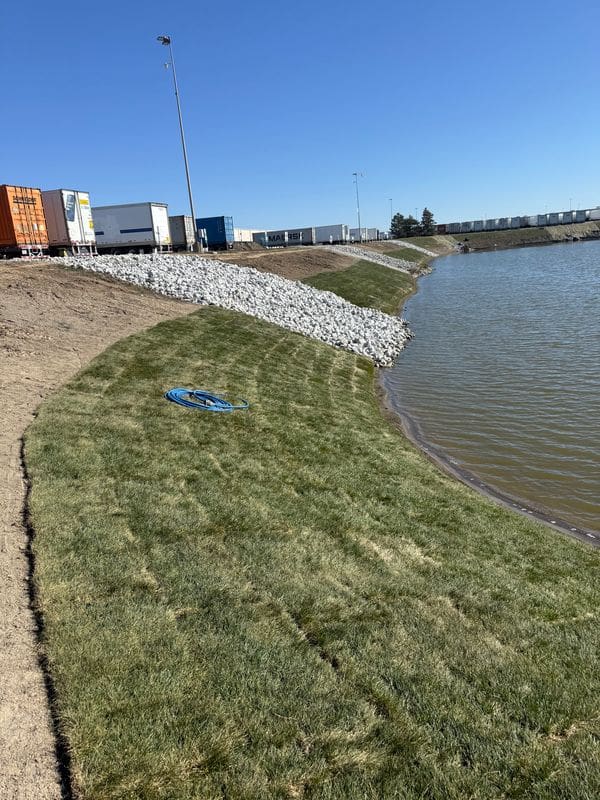
- Riprap,
- Staked Sod (up to 2:1 slope), or
- If cribbing, terracing, or rip rap are used, the slope stability and erodibility characteristics must be equivalent to or better than its predevelopment state.
6. Hillside/Hilltop Overlay District
Revegetation of lands within the Hillside/ Hilltop Overlay District shall be planted immediately after the physical alteration of the land with complete and uniform ground cover. Sod, erosion fabric, herbaceous groundcover (in wooded areas), and/or a hydroseed with warm season grasses is required. Revegetation requirements shall be met prior to the issuance of the certificate of occupancy. Cut and Fill tie-back slopes shall be re-vegetated with appropriate tree species to achieve a minimum of 25% tree canopy at maturity.
Land shall be revegetated and restored as close as practically possible to its original conditions so far as to minimize runoff and erosion are concerned. Previously forested areas shall follow the City’s Landscape Manual for mitigation of forested areas.
- Flexible Down Drain: This is a temporary structure used to convey stormwater from one elevation to another without causing erosion. It is made of heavy-duty fabric or other material that can be removed when the permanent water disposal system is installed.
Water Control:
- Subsurface Drains: Subsurface drains used to remove excess groundwater are sometimes required at the base of fill slopes or around building foundations. When heavy grading is done and natural water channels are filled, the subsurface drains may be used to prevent accumulation of groundwater. Subsurface drains may be needed in vegetated channels to lower a high water table and to improve drainage conditions so vegetation can be established and maintained.
View State Page
Frequently Asked Questions
Do I need a maintenance agreement for stormwater BMPs on my Fayetteville property?
Yes, a BMP-specific one for each development site. It has to include a signed Inspection and Maintenance Agreement, a long-term maintenance plan written by an engineer or site designer describing the system and its inspection schedule, and a drawing showing easements so the city can locate the BMPs later. The full package gets submitted with your site plans and reviewed before approval.
Do I have to record my stormwater maintenance agreement anywhere in Fayetteville?
Yes. Once the city approves your site plans and maintenance agreement, you’re required to record the agreement and its attachments with the register of deeds. That makes it a matter of public record tied to the property, not just an internal document on file with the city.
How often do I need to report on BMP maintenance in Fayetteville?
Annually. As the property owner, you’re responsible for inspecting and maintaining your BMPs and submitting inspection reports each year showing that upkeep actually happened. That’s an ongoing obligation that doesn’t end once the maintenance agreement is recorded.
How much land can be disturbed at once during construction in Fayetteville?
No more than 20 acres at a time. You can’t open additional area beyond that without the City Engineer’s permission until previously disturbed areas have been temporarily or permanently stabilized, which keeps a project’s total exposed, erosion-prone footprint in check throughout construction.
What are Fayetteville's revegetation requirements before I can get a certificate of occupancy?
It depends on slope. Flat ground (zero to 10% grade) needs seeding and mulching that reaches complete, uniform coverage within two growing seasons. Moderate slopes require hydroseeding, staked sod, or groundcover, and steeper slopes (4:1 to 3:1) need landscape fabric with hydroseeding. Anything steeper than 3:1 needs structural stabilization like retaining walls, terracing, or riprap. All of it has to be in place before the city issues a final plat or certificate of occupancy.
Does Fayetteville have extra revegetation rules for hillside properties?
Yes. Properties within the Hillside/Hilltop Overlay District have to be revegetated immediately after land is disturbed, using sod, erosion fabric, groundcover, or hydroseeding with warm season grasses, and it has to happen before the certificate of occupancy is issued rather than on the standard timeline. Cut and fill slopes in that district also need enough tree planting to reach at least 25% canopy cover at maturity.
How much topsoil does Fayetteville require for revegetation?
A minimum of 4 inches in areas being revegetated, though that gets reduced to about 3 inches near a tree’s drip line to avoid damaging its root system during the topsoil and seeding process.
How can AQUALIS help my property stay compliant with Fayetteville's stormwater requirements?
AQUALIS helps Fayetteville property owners prepare the BMP maintenance agreement package required at site plan submission, manage the annual inspection reporting the city requires afterward, and design revegetation and stabilization work that meets the city’s slope-based standards before a certificate of occupancy is on the line.
The information on this page is provided for general informational purposes only and is not legal advice. Regulations change frequently — AQUALIS makes no warranty as to the accuracy or completeness of this content, and any reliance on it is at your own risk. Consult a qualified professional or your local regulatory authority to confirm requirements applicable to your specific property.