



Last Updated 08/24/2026
Camden, New Jersey Code of Ordinance
Article III Stormwater Control
Standards for Structural Stormwater Management Measures.
A. Standards for structural stormwater management measures are as follows:
1. Structural stormwater management measures shall be designed to take into account the existing site conditions, including, for example, environmentally critical areas, wetlands; flood-prone areas; slopes; depth to seasonal high water table; soil type, permeability and texture; drainage area and drainage patterns; and the presence of solution-prone carbonate rocks (limestone).
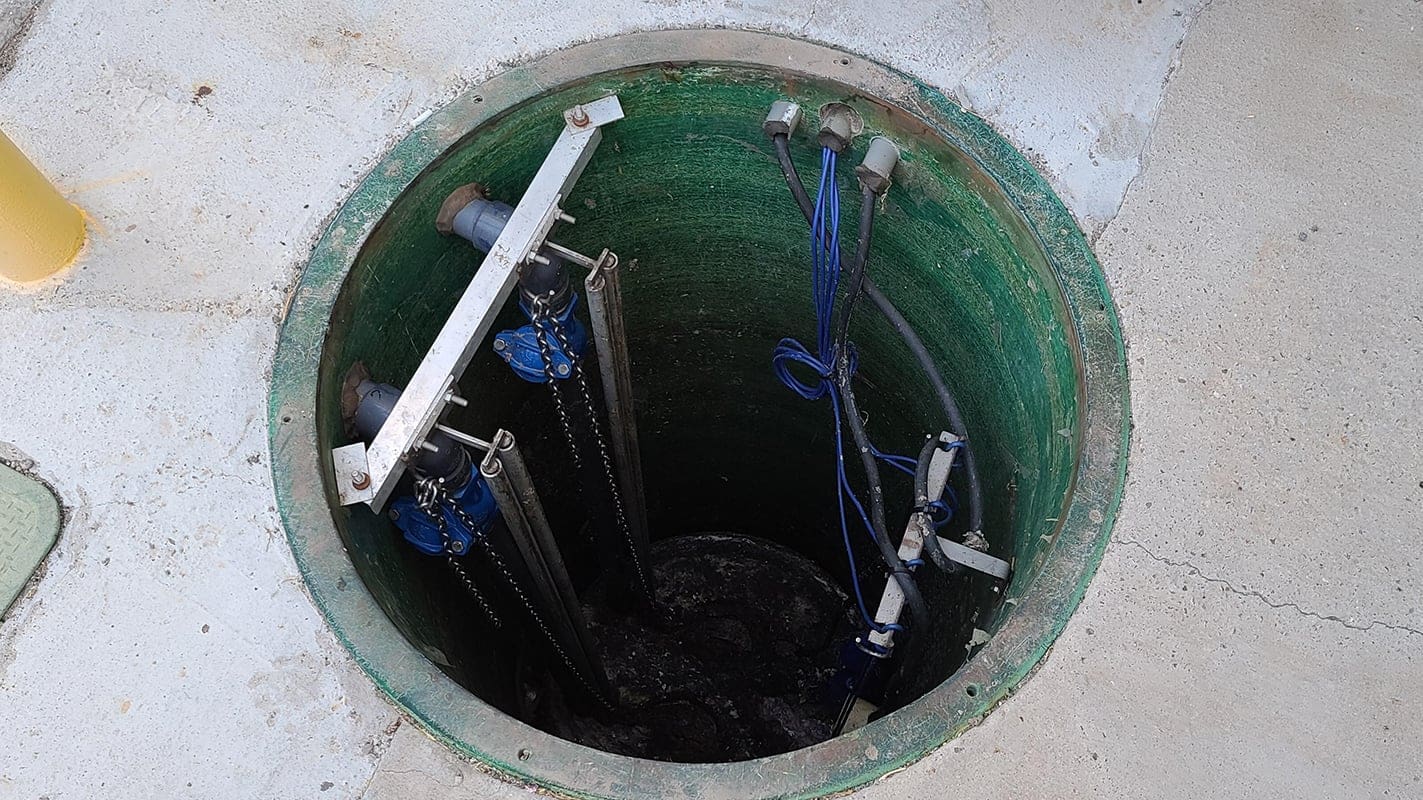
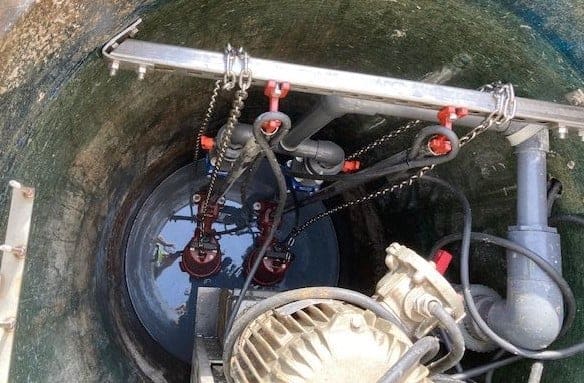
2. Structural stormwater management measures shall be designed to minimize maintenance, facilitate maintenance and repairs, and ensure proper functioning. Trash racks shall be installed at the intake to the outlet structure as appropriate, and shall have parallel bars with one-inch spacing between the bars to the elevation of the water quality design storm. For elevations higher than the water quality design storm, the parallel bars at the outlet structure shall be spaced no greater than one-third the width of the diameter of the orifice or one-third the width of the weir, with a minimum spacing between bars of one-inch and a maximum spacing between bars of six inches.
3. Structural stormwater management measures shall be designed, constructed, and installed to be strong, durable, and corrosion resistant.
4. At the intake to the outlet from the stormwater management basin, the orifice size shall be a minimum of two and one-half inches in diameter.
5. Stormwater management basins shall be designed to meet the minimum safety standards for stormwater management basins.
B. Stormwater management measure guidelines are available in the New Jersey Stormwater Best Management Practices Manual. Other stormwater management measures may be utilized provided the design engineer demonstrates that the proposed measure and its design will accomplish the required water quantity, groundwater recharge and water quality design and performance standards established by this ordinance.
Safety Standards for Stormwater Management Basins.
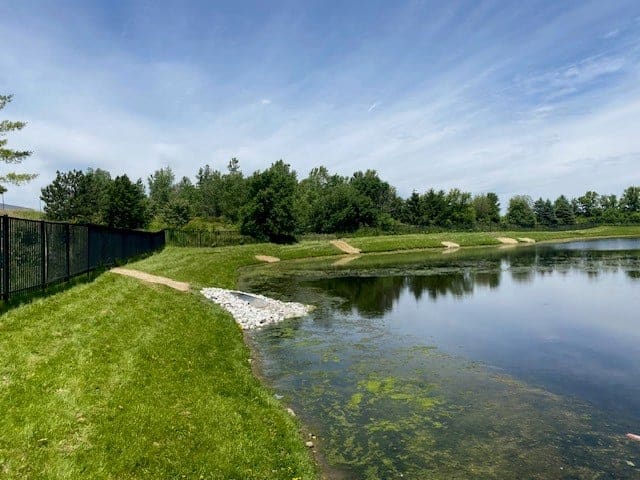
A. This section sets forth requirements to protect public safety through the proper design and operation of stormwater management basins. This section applies to any new stormwater management basin.
B. Requirements for Trash Racks, Overflow Grates and Escape Provisions.
1. A trash rack is a device designed to catch trash and debris and prevent the clogging of outlet structures. Trash racks shall be installed at the intake to the outlet from the stormwater management basin to ensure proper functioning of the basin outlets in accordance with the following:
a. The trash rack shall have parallel bars, with no greater than six inch spacing between the bars.
b. The trash rack shall be designed so as not to adversely affect the hydraulic performance of the outlet pipe or structure.
c. The average velocity of flow through a clean trash rack is not to exceed two and one-half feet per second under the full range of stage and discharge. Velocity is to be computed on the basis of the net area of opening through the rack.
d. The trash rack shall be constructed and installed to be rigid, durable, and corrosion resistant, and shall be designed to withstand a perpendicular live loading of three hundred (300) lbs/ft sq.
2. An overflow grate is designed to prevent obstruction of the overflow structure. If an outlet structure has an overflow grate, such grate shall meet the following requirements:
a. The overflow grate shall be secured to the outlet structure but removable for emergencies and maintenance.
b. The overflow grate spacing shall be no less than two inches across the smallest dimension.
c. The overflow grate shall be constructed and installed to be rigid, durable, and corrosion resistant, and shall be designed to withstand a perpendicular live loading of three hundred (300) lbs./ft sq.
3. For purposes of this paragraph 3, escape provisions means the permanent installation of ladders, steps, rungs, or other features that provide easily accessible means of egress from stormwater management basins. Stormwater management basins shall include escape provisions as follows:
a. If a stormwater management basin has an outlet structure, escape provisions shall be incorporated in or on the structure. With the prior approval of the reviewing agency a free-standing outlet structure may be exempted from this requirement.
b. Safety ledges shall be constructed on the slopes of all new stormwater management basins having a permanent pool of water deeper than two and one-half feet. Such safety ledges shall be comprised of two steps. Each step shall be four to six feet in width. One step shall be located approximately two and one-half feet below the permanent water surface, and the second step shall be located one to one and one-half feet above the permanent water surface.
c. In new stormwater management basins, the maximum interior slope for an earthen dam, embankment, or berm shall not be steeper than three horizontal to one vertical.
Maintenance and repair.
View State Page
Frequently Asked Questions
What are my ongoing stormwater maintenance obligations as a property owner in Camden?
If your property in Camden has a stormwater management facility such as a detention basin, outlet structure, or infiltration system, you are responsible for keeping it in good working order after construction is complete. The City of Camden requires that all stormwater facilities be maintained according to an approved maintenance plan, which covers tasks like sediment and debris removal, vegetation control, and inspection of structural components such as trash racks and outlet orifices. AQUALIS manages these ongoing maintenance obligations for Camden property owners, so nothing gets missed once a project moves from construction into everyday operation.
Do I need a maintenance plan for my stormwater facilities in Camden?
Yes. Major developments in Camden must incorporate a maintenance plan for their stormwater management measures as a condition of approval. That plan needs to spell out specific preventative maintenance tasks and schedules, cost estimates for sediment and debris removal, and contact information for the party responsible for upkeep. AQUALIS develops and manages these post-construction maintenance plans for property owners across Camden, keeping the documentation current and the facility itself functioning as designed.
What happens if the City of Camden finds a problem with my stormwater facility?
The City of Camden has the authority to inspect properties for stormwater compliance and issue a Notice of Violation if it finds deficiencies in a facility’s condition or maintenance. Once a property owner receives that notice, there is a 14 day window to correct the issue before further enforcement action follows. AQUALIS helps Camden property owners respond quickly to any Notice of Violation, correcting the underlying problem and working directly with the city to resolve it within the required timeframe.
Who is responsible for maintaining a stormwater facility once a development in Camden is complete?
Once a project in Camden receives final approval, responsibility for maintaining the stormwater management facility shifts to the property owner. This includes keeping outlet structures clear, managing vegetation, removing accumulated sediment, and ensuring the system continues to function as it was originally designed and permitted. AQUALIS takes on this long term responsibility for Camden property owners, providing the routine maintenance and oversight the city expects without the owner having to manage it directly.
Where can I find guidance on stormwater best management practices for my Camden property?
The City of Camden references the New Jersey Stormwater Best Management Practices Manual, and the city has also published its own Green Infrastructure Handbook to help property owners understand design and maintenance expectations. Reviewing these resources can be a lot to take on for an individual property owner. AQUALIS stays current on both the state manual and Camden’s own guidance documents, so property owners always have someone applying the latest standards to their site.
Is there a single resource for managing all of my stormwater compliance needs in Camden?
Between design standards, maintenance plans, inspections, and enforcement timelines, staying compliant with Camden’s stormwater program involves several moving pieces that can be hard to track on your own. AQUALIS offers Camden property owners a single point of contact for stormwater management, covering maintenance plan development, ongoing inspections, Notice of Violation response, and general compliance consulting, so property owners can meet the City of Camden’s requirements without managing every detail themselves.
The information on this page is provided for general informational purposes only and is not legal advice. Regulations change frequently — AQUALIS makes no warranty as to the accuracy or completeness of this content, and any reliance on it is at your own risk. Consult a qualified professional or your local regulatory authority to confirm requirements applicable to your specific property.