

Last Updated 08/19/2026
Maryland Stormwater Laws
The Stormwater Management Law, passed in 1982, required appropriate best management practices (BMPs) in order to maintain after development, as nearly as possible, the pre-development runoff conditions. Over the years, the program has undergone significant revisions and enhancements, the most recent being the Stormwater Management Act of 2007 (Act). In addition to other innovative provisions included in a 2000 revision to the State’s stormwater program, this legislation required environmental site design (ESD) to the maximum extent practicable (MEP) on all new development and redevelopment projects.
COMAR 26.17.02
City of Baltimore Stormwater Ordinance is adopted in accordance with Code of Maryland Regulations (COMAR) 26.17.02.
City of Baltimore Stormwater Ordinance
The goal of the City of Baltimore’s stormwater ordinance is to:
- Protect, maintain, and enhance the environment of the City of Baltimore and the public health, safety and the general welfare of the citizens of the city, by controlling discharges of pollutants to the public stormwater system, with the intent of maintaining and improving the quality of the receiving waters into which the stormwater outfalls flow, including, without limitation, lakes, rivers, streams, ponds, wetlands, and groundwater of the city.
- Enable the City of Baltimore to comply with the National Pollutant Discharge Elimination System permit (NPDES) and applicable regulations.
Scope- This title applies to development or redevelopment of land for residential, commercial, industrial, institutional, or governmental use.
§ 33-4-107. STORMWATER MANAGEMENT PLANS.
(a) In general. Unless an exemption, waiver, or variance has been granted and except as provided in subsection (f) of this section, before any grading or building permit is issued or any grading or building is conducted, the applicant shall comply with the requirements for the concept, development, and final stormwater management plans.
(b) Concept stormwater management plan. An applicant shall submit a concept stormwater management plan that provides sufficient information for an initial assessment of the proposed project and determination as to whether stormwater management can be provided in accordance with§ 33-4-106.l of this title.
§ 33-4-110. MAINTENANCE RESPONSIBILITY.
Upon completion and acceptance of the stormwater management devices, practices, or both:
- The county shall take in-fee ownership of the stormwater management devices and practices designated for public maintenance; and
- For privately maintained stormwater management devices, practices, or both:
- The property owner shall be responsible for maintenance; and
- The property owner’s specific maintenance responsibilities shall be detailed in a recorded deed of declaration for maintenance and access.
(1988 Code,§ 14-159) (Bill No. 53-01, § 1, 7-2-2001; Bill No. 94-02, § 2, 7-1-2004)
§ 33-4-111. MAINTENANCE INSPECTION.
- Department to inspect. The Department shall inspect all ESD treatment systems and structural stormwater management devices and practices to ensure that they are functioning properly:
- During the first year of operation; and
- At least once every 3 years after the first year.
- Repair procedures.
- The owner or owners of any property on which ESD treatment systems and structural stormwater management devices or practices are found to be deficient and in need of maintenance shall be notified of the required repairs and given a reasonable time in which to comply;
- A follow-up inspection shall be made to determine if the repairs have been completed in a satisfactory manner; and
- The county and its agent may enter on the property of persons who do not comply with a maintenance notification requiring repairs to any stormwater management devices or practices to perform the necessary maintenance and to assess any direct or indirect cost involved to the owner or owners of the property, including the owners of all property served by the device or practice, which cost shall be a lien on the property of the owner or owners in the same manner as real property taxes, and shall be collected in the same manner provided by law for the collection of real property taxes.
- The county may collect the costs imposed under paragraph (I) of this section:
- In annual installments not exceeding three in number;
- With interest at the rate of 6% per annum, on an authorized basis; and
- On such other terms and conditions as considered appropriate by the county.
- Department to maintain inspection reports. The Department shall maintain inspection reports for ESD treatment systems and structural stormwater management devices and practices that include the following information:
- The date of inspection;
- The name of inspector;
- The condition of:
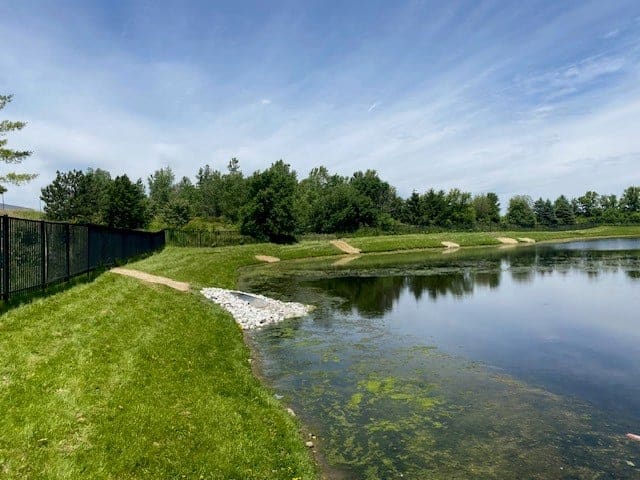
- Vegetation and landscaping;
- Fences;
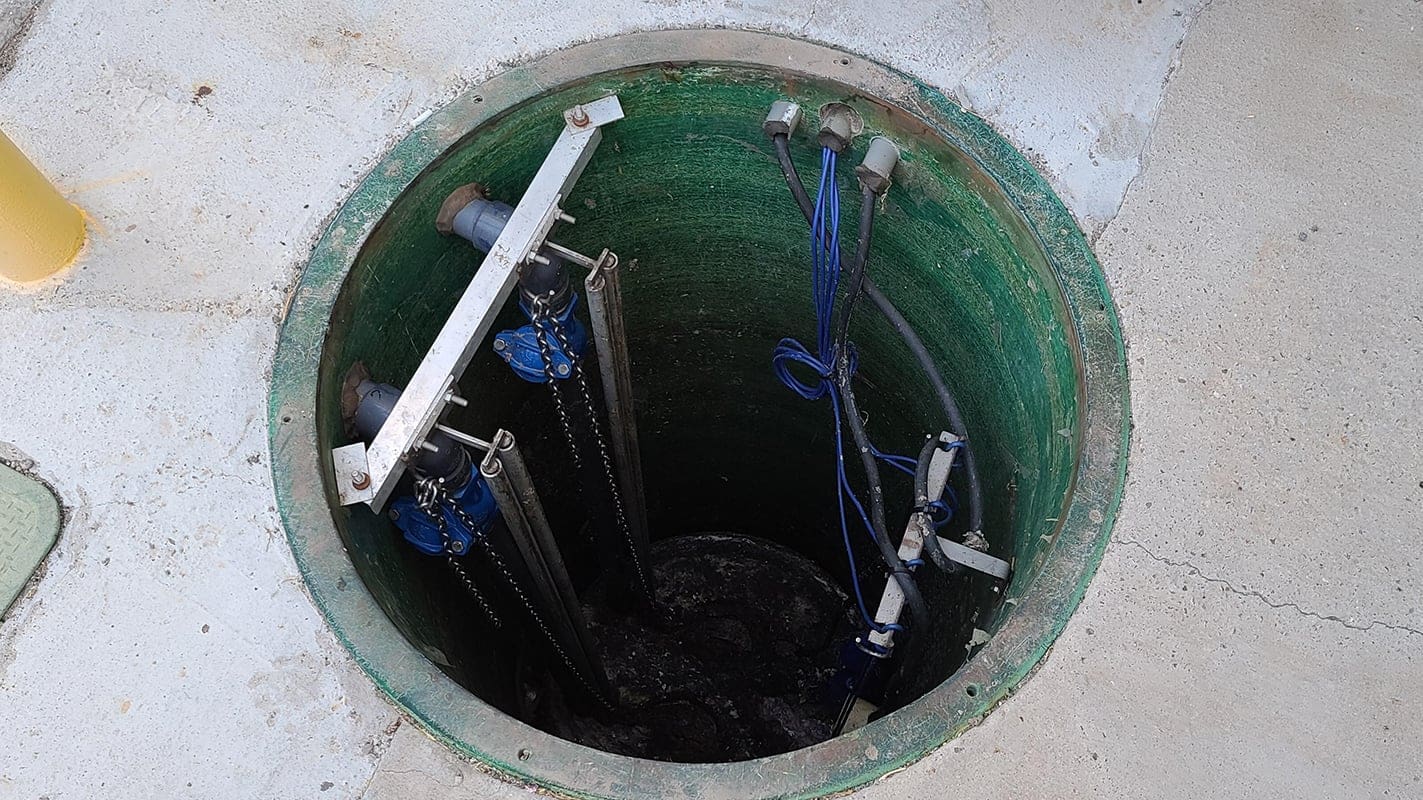
- Spillways, valves, or other control structures;
- Embankments, slopes, and safety benches;
- Reservoir and treatment areas;
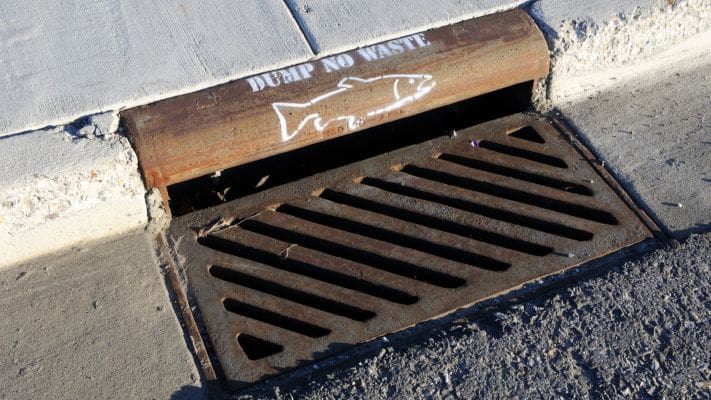
- Inlet and outlet channels or structures;
- Underground drainage;
- Sediment and debris accumulation in reservoir and forebay areas;
- ESD treatment systems and structural stormwater management devices and practices, to the extent practicable; and
- Any other item which could affect the proper function of the stormwater management system; and
- A description of needed maintenance.
(1988 Code,§ 14-160) (Bill No. 53-01, § 1, 7-2-2001; Bill No. 94-02, § 2, 7-1-2004; Bill No. 75-03, § 45, 7-1-2004; Bill No. 84-08, § 1, 8-15-2008; Bill No. 25-10, § 1, 6-1-2010)
BALTIMORE CITY STORMWATER MANAGEMENT MANUAL
5.1 Maintenance Inspection.
A. The Department shall ensure that preventative maintenance is performed by inspecting all stormwater management systems. Inspection shall occur during the first year of operation and at least once every 3 years thereafter. In addition, a maintenance agreement between the owner and the approving agency shall be executed for privately owned stormwater management systems. The maintenance agreement is provided in Attachment G.
B. After notification is provided to the owner of any deficiencies discovered from an inspection of a stormwater management system, the owner shall have 30 days or other time frame mutually agreed to between the approving agency and the owner, to correct the deficiencies. The Department shall then conduct a subsequent inspection to ensure completion of the repairs.
C. If repairs are not undertaken or are not found to be done properly, then enforcement procedures described in Section 2.12.1 shall be followed by the Department.
D. If, after an inspection by the Department, the condition of a stormwater management facility presents an immediate danger to the public health or safety, because of an unsafe condition or improper maintenance, the Department shall take such action as may be necessary to protect the public and make the facility safe. Any cost incurred by the Municipality shall be assessed against the owner(s), as provided in Section 2.15.
5.2 Maintenance Agreement
Prior to the issuance of any building permit for which stormwater management is required, the Department shall require the applicant or owner to execute an inspection and maintenance agreement binding on all subsequent owners of land served by a private stormwater management facility. Such agreement shall provide for access to the facility at reasonable times for regular inspections by the Department, or its authorized representative to ensure that the facility is maintained in proper working condition to meet design standards. The agreement shall be recorded by the applicant and/or owner in the land records of Baltimore City. (Maintenance Agreement Below)
The agreement shall also provide that, if after written notice by the Department to correct any nonconformance with an approved plan, satisfactory corrections are not made by the owner(s) within a reasonable period of time, not to exceed 30 days, unless extended for good cause shown, the Department, or its designee, may perform all necessary work to place the facility in proper working condition. The owner(s) of the facility shall be assessed the cost of the work and any penalties. This may be accomplished by revoking the maintenance bond or placing a lien on the property, which may be placed on the tax bill and collected as ordinary taxes by the Department of Finance.
5.3 Maintenance Responsibility.
The owner of the property on which work has been done pursuant to this Ordinance for private stormwater management facilities, or any other person or agent in control of such property, shall maintain in good condition and promptly repair and restore all grade surfaces, walls, drains, dams and structures, vegetation, erosion and sediment control measures, and other protective devices. Such repairs or restoration and maintenance shall be in accordance with approved plans.
A maintenance schedule shall be developed for the life of any stormwater management facility and shall state the maintenance to be completed, the time period for completion, and who shall perform the maintenance. This maintenance schedule shall be printed on the approved stormwater management plan.
Stormwater Utility Fee and Credit Adjustments
Property Fees
Single-family properties are charged one of three rates:
• Tier 1 properties have no more than 820 square feet of impervious surface area, and pay $52 per year ($4.33 each month)
• Tier 2 properties have more than 820 square feet but no more than 1,500 square feet of impervious surface area, and pay $78 per year ($6.50 each month).
• Tier 3 properties have more than 1,500 square feet of impervious surface area, and pay $156 per year ($13 each month).
Non-single family properties are billed based on a measure called an Equivalent Residential Unit (ERU), which is the size of the impervious surface area (1,050 square feet) of the median-sized house in the City. The larger the impervious surface area of a parcel, the higher the stormwater fee for the property. Non-single family properties pay $78 per ERU per year.
Credits and Fee Reductions
An industrial, commercial or institutional property’s fee may be reduced upon installation of County-approved stormwater best-management practices (BMPs) to reduce the property’s pollutant load. This credit is based on the amount of impervious surface that drains to the BMP and its efficiency at removing pollutants.
If your property includes County-approved stormwater management facilities, the appropriate credits have already been applied to your fee. If you believe you are entitled to additional credit, contact the Department of Environmental Protection and Sustainability with supporting documentation, such as design plans prepared by a qualified professional.
View State Page
Frequently Asked Questions
What does Baltimore's stormwater ordinance require before a grading or building permit is issued?
Unless an exemption, waiver, or variance applies, applicants must comply with concept, development, and final stormwater management plan requirements before any grading or building permit is issued or work begins. The concept plan must provide enough information for an initial assessment of whether stormwater management can be provided for the project.
Who is responsible for maintaining stormwater devices after they're installed in Baltimore?
Once a stormwater device or practice is completed and accepted, the county takes in-fee ownership of devices designated for public maintenance. For privately maintained devices, the property owner is responsible for upkeep, with specific responsibilities detailed in a recorded deed of declaration for maintenance and access.
How often does Baltimore inspect stormwater management systems?
The Department inspects all ESD treatment systems and structural stormwater devices during their first year of operation and at least once every three years after that. Inspection reports cover vegetation, control structures, embankments, and sediment accumulation, among other elements, and are kept on file by the department.
What happens if a Baltimore property doesn't make required stormwater repairs?
The owner is notified of needed repairs and given a reasonable time to comply, typically up to 30 days. If repairs aren’t completed, the county or its agent can enter the property to perform the necessary maintenance and assess the cost to the owner. That cost becomes a lien on the property, collected the same way as real property taxes, and can be paid in up to three annual installments with interest.
How is Baltimore's stormwater utility fee calculated for commercial and institutional properties?
Non-single-family properties are billed using an Equivalent Residential Unit, based on the 1,050-square-foot impervious surface area of the median-sized house in the city. The larger a property’s impervious surface area, the more ERUs it’s billed for, at a rate of $78 per ERU per year.
Can a commercial or institutional property reduce its stormwater fee in Baltimore?
Yes. Properties that install approved stormwater best management practices can qualify for a fee reduction, based on how much impervious surface area drains to the practice and how effectively it removes pollutants. If a property already has approved stormwater facilities, the credit has typically already been applied. Owners who believe they’re entitled to additional credit can submit supporting documentation, such as design plans from a qualified professional, to the Department of Environmental Protection and Sustainability.
The information on this page is provided for general informational purposes only and is not legal advice. Regulations change frequently — AQUALIS makes no warranty as to the accuracy or completeness of this content, and any reliance on it is at your own risk. Consult a qualified professional or your local regulatory authority to confirm requirements applicable to your specific property.